Many people spend hours sitting at work, during travel, or while relaxing at home. While it feels harmless, prolonged sitting can place continuous stress on the body. Research shows that sitting for long periods is linked to increased muscle stiffness, poor posture, and common pain issues, especially around the neck and lower back.
Why Sitting Too Long Causes Pain
When you stay in the same position for too long, certain muscles become tight while others become weaker. The hip flexors, chest muscles, and lower back often become overloaded. At the same time, the muscles responsible for posture and stability may become less active. This imbalance can lead to discomfort and reduced movement quality.
Posture Plays a Bigger Role Than You Think
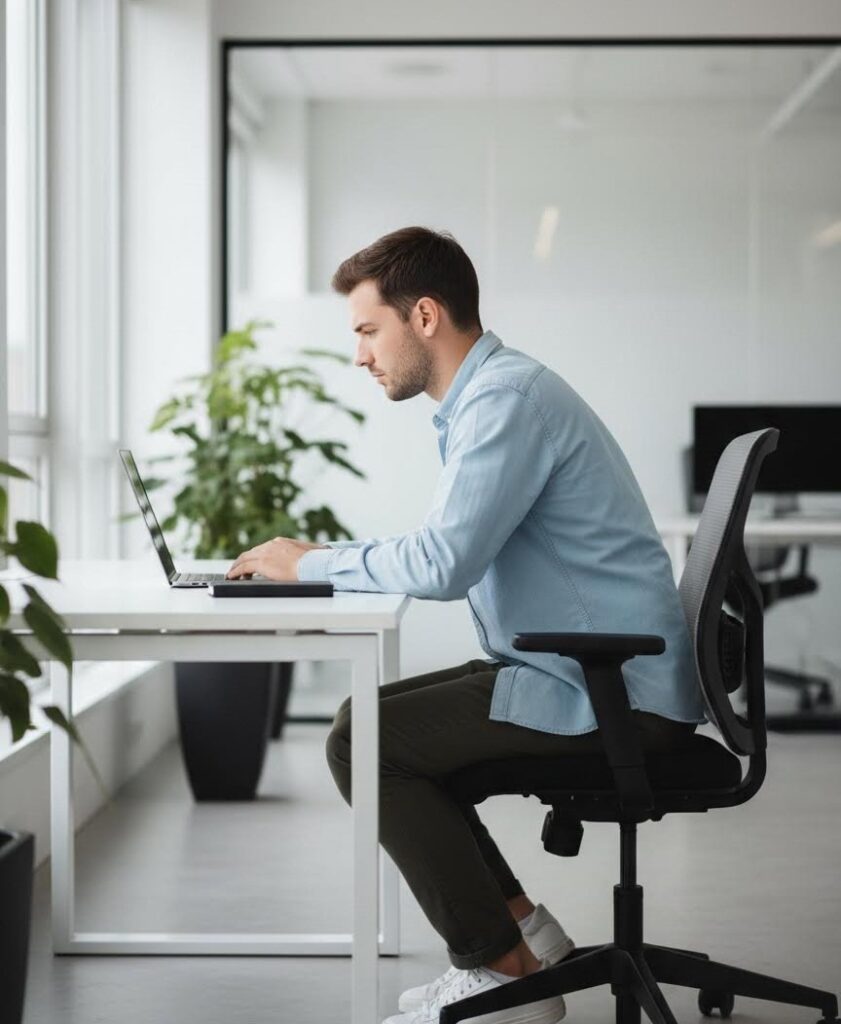
Prolonged sitting often encourages slouched posture, rounded shoulders, and forward head position. These positions increase stress on joints and soft tissues over time. Research also suggests that reduced movement variability during sitting may contribute to discomfort and musculoskeletal pain.
Movement Is the Missing Piece
One of the best ways to reduce pain from prolonged sitting is regular movement. Standing up, stretching, or walking for short periods throughout the day can help reduce stiffness and improve circulation. Small movement breaks are often more effective than staying still for hours and exercising only once later in the day.
Pain Is Often a Build Up, Not a Sudden Problem
Pain from prolonged sitting usually develops gradually. Many people ignore small signs like tightness or stiffness until it becomes harder to manage. Paying attention to these early signals can help prevent bigger issues later.
Stay Active, Not Just Comfortable
Comfort does not always mean your body is doing well. If prolonged sitting is starting to affect your movement or daily activities, Amare Physio can help identify the cause and guide you with strategies to move better and stay pain free long term.
References:
https://www.health.harvard.edu/pain/the-end-of-painful-sitting