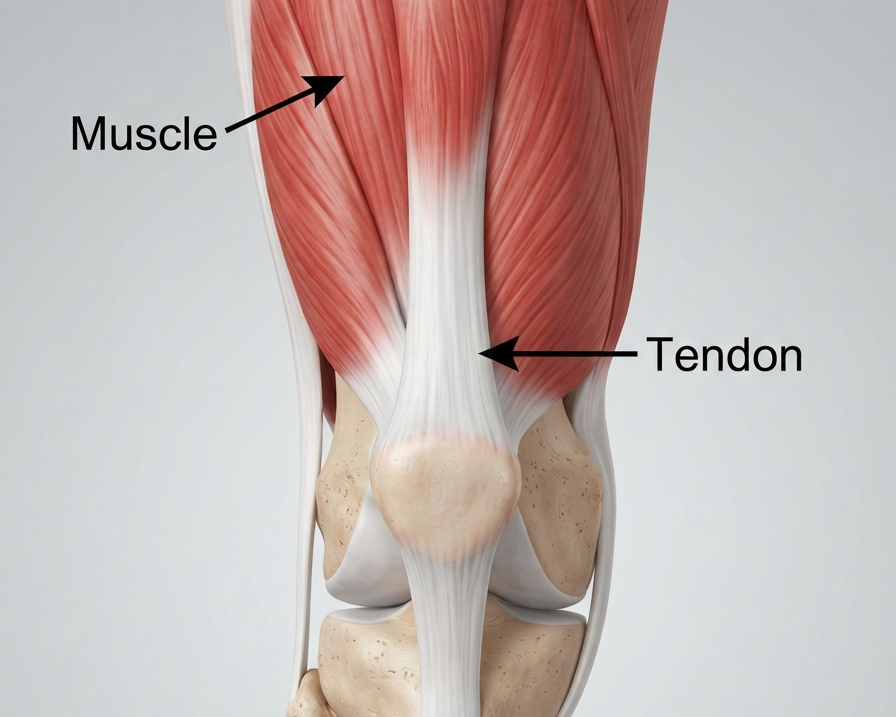
Have you ever pulled a muscle, recovered in a few weeks, then wondered why a tendon injury seemed to linger for months?
It is a common experience. While muscles and tendons both help you move, they heal differently. Understanding tendon healing can help you set realistic expectations and avoid returning to sport before your body is ready.
Why Muscles Usually Recover Faster
Muscles have a rich blood supply, which helps deliver oxygen and nutrients needed for repair.
After a muscle strain, the body begins rebuilding damaged tissue. Although recovery time depends on the severity of the injury, muscles generally heal more quickly than tendons because they receive better circulation.
Why Tendon Healing Takes Longer
Tendons connect muscles to bones and have a much lower blood supply. That slower circulation means the repair process also moves more slowly. Even when the pain starts to settle, the tendon may still be adapting and rebuilding its ability to handle load.
This is one reason tendon pain can seem to improve, then return if activity increases too quickly.
Pain Does Not Always Mean Full Recovery
Feeling better does not always mean the tendon has fully recovered. As pain decreases, many people assume they can return to their previous training without restrictions. However, the tendon may still need gradual loading to regain its strength and capacity.
Patience during this stage can reduce the chance of the problem coming back.
What Helps Tendon Recovery?
Complete rest is rarely the long-term answer.
Instead, tendons usually respond well to a progressive exercise program that gradually increases the amount of load they can tolerate. The goal is to challenge the tendon without pushing beyond what it can currently manage.
The Bigger Picture
Muscles and tendons both heal, but they do so on different timelines. Understanding tendon healing can help you make smarter decisions about training and recovery instead of relying on pain alone.
If tendon pain keeps returning or you are unsure when it is safe to get back to your sport, Amare Physio can assess your recovery and create a rehabilitation plan that matches your goals and activity level.
References:
https://www.jospt.org/doi/10.2519/jospt.2015.5884
https://onlinelibrary.wiley.com/doi/10.1111/j.1600-0838.2007.00746.x