Have you ever felt like you saw the ball, but your body reacted just a little too late? Many players assume the problem is speed or fitness. In reality, reaction time can make just as much difference, especially during fast exchanges at the net.
Why Reaction Time Matters
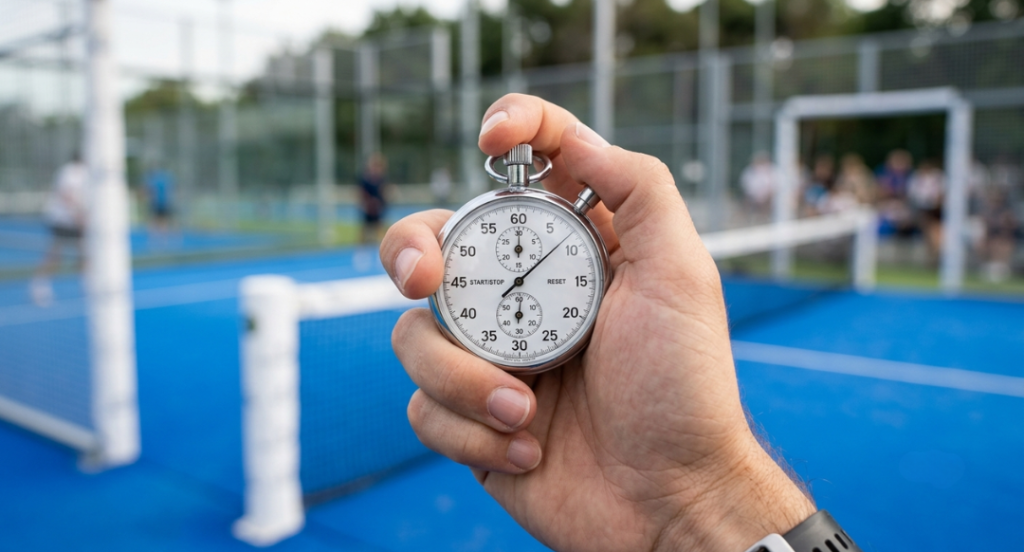
Every shot in padel gives you only a brief moment to decide where to move and how to respond. The sooner your brain recognizes what is happening, the sooner your body can act. Good reaction time is not just about quick hands. It is about processing information efficiently so you can move into position before the ball gets away.
It Is More Than Just Fast Reflexes
Many people think reaction time is something you are born with. While natural ability plays a role, your response speed is also a skill that can be practiced. The more often your brain and body work together in game-like situations, the more efficiently they learn to react under pressure.
Simple Ways to Train Reaction Time
You do not need expensive equipment to improve. Try catching a tennis ball after it bounces unpredictably off a wall. Ask a training partner to call directions while you move. Add quick decision-making into your warm-up instead of only stretching. These drills challenge both your movement and your ability to react, making them more relevant than simply moving faster.
Don’t Forget Recovery
Quick reactions also depend on being mentally fresh. Research in padel players suggests that fatigue from competition can affect reaction speed, even when physical performance remains relatively stable. Looking after your sleep and recovery helps your brain respond when it matters most.
The Bigger Picture
Better reaction time will not replace good technique or tactics, but it helps you use both more effectively. Small improvements in how quickly you recognize and respond to the game can make difficult shots feel much more manageable.
If you feel one step behind on court or keep reacting late despite regular training, Amare Physio can help identify what is limiting your movement and build a plan that supports your performance goals.
References:
https://pmc.ncbi.nlm.nih.gov/articles/PMC12403390/
https://revista-padel.unex.es/index.php/padel/article/view/2398/2147